
Upper Elementary (ages 9-12)
Our Upper Elementary Program for ages 9 to 12 (grades 4-6) continues to build on the foundations laid in Lower Elementary. Lessons are regularly filled with opportunities to delve deeper into the topics presented in our expansive curriculum. Independent and collaborative learning are woven into each class while meaningful overlap between subject areas is encouraged so that children gain value from our multidisciplinary educational approach.
A Typical Day At Upper Elementary
8:00-8:30 am — Arrival
8:45-11:15 am — Independent Work Cycle, Group Lessons, Community Meeting, Enrichment Class
11:30-12:30 pm — Lunch & Recess
12:45-2:00 pm — Independent Work Cycle, Group Lessons, and Advisory Meetings
2:30-3:00 pm — Dismissal
As our Upper Elementary students reach adolescence, they continue to progress through Montessori’s Cosmic Curriculum while also enjoying the privileges of increased responsibilities and opportunities provided to them.
Over the course of the three-year cycle, Upper Elementary students engage in various studies including human evolution and the migrations of early humans, the timelines of various ancient civilizations, the study of indigenous peoples of the Americas across time, and the understanding of U.S. history. They also study the vital functions of plants and animals, advanced classification and taxonomy, and human biology; the physics of simple machines, astronomy, chemistry, stellar nucleosynthesis, and Earth sciences.
Developmentally, our students experience quite a bit of growth. Our 4th grade students are excited about joining the older children and the advanced subjects at this level; the 5th graders, who are coming into their own now, are typically confident and conscientious workers; while the 6th grade “elders” spend their third year with us developing and applying their leadership skills and deepening their academic and personal interests.
“Knowledge can best be given where there is eagerness to learn, so this is the period when the seed of everything can be sown, the child’s mind being like a fertile field, ready to receive what will germinate into culture….”


Our Upper Elementary Curriculum
An Expansive, Integrated Curriculum
While many traditional curricula for this age range start locally and zoom out, Maria Montessori’s approach was to provide exposure to the broad picture of life on this planet before zooming in. This expansive, “cosmic” approach helps children to develop an appreciation for the magnitude of time and space, and gratitude for having a part in the immense story of the universe.. However, even in her time, it would have been an impossibility to give the details of all human knowledge, so Maria Montessori suggested introducing all subjects to the elementary child, “not in a syllabus to be imposed on him, or with exactitude of detail, but in the broadcasting of the maximum number of seeds of interest” (To Educate the Human Potential).
Below is an approximation of the 3-year Cosmic learning cycle. Note that children’s interests and current events inform the pacing and approach to these topics:
Biology runs in a 2-year cycle so that 4th and 5th years learn about Vital Functions of Animals and Vital Functions of Plants, thus leaving Human Biology for 6th years.
World Geography is also a component of the Cosmic Curriculum, with students mapping the continents and countries as they engage in the study of peoples and historic events around the globe.
Each year, our 6th year Elders also engage in learning about Human Biology, and they identify a topic of personal significance to explore and research over the course of the year, culminating in a 5-page research paper and Capstone presentation.
Personal Responsibility & Executive Function Skills
At the Upper Elementary level, we foster personal responsibility for the students’ work. The work journal (or planner) is their main tool to track work assignments and help develop organizational and time-management skills. Students receive lessons in writing, science, math, and geometry throughout the week, along with participating in book clubs, and manage their own follow-up assignments during independent work time. We hold advisory connections regularly so that we can support children’s skills development around task initiation, task stamina, and prioritization.
Community Building
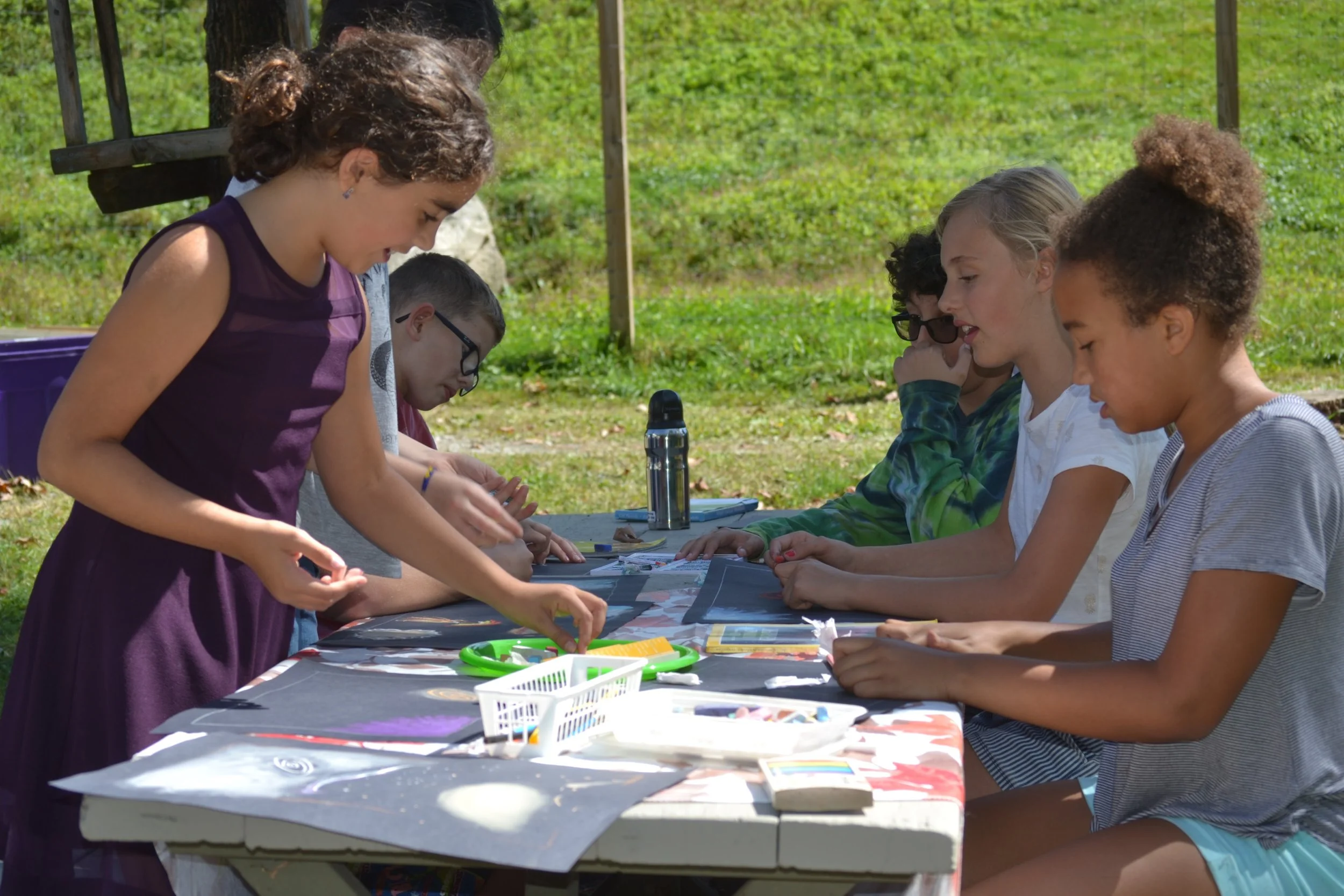
Socially and emotionally, the 9-12 year-old is looking to become more independent and autonomous. They are moving away from the family and toward peer social groupings. In school, we translate these developmental tendencies into an emphasis on community through our advisor groups, cooperative group lessons, and full Upper Elementary level class meetings and activities.
Peace and mindfulness practices are a part of our daily routines at the Homestead, starting with student-led morning circles with check-ins and breathing exercises.
Our 6th year Elders also hold an important role in the community as models, not just for the younger children in the program, but for the entire campus. We provide regular opportunities for the 6th years to discuss what they perceive to be working and what could be fixed in their community. Student governance models, available to all students, offer additional spaces for children to engage in authentic problem-solving.
Authentic Experiences & Audiences
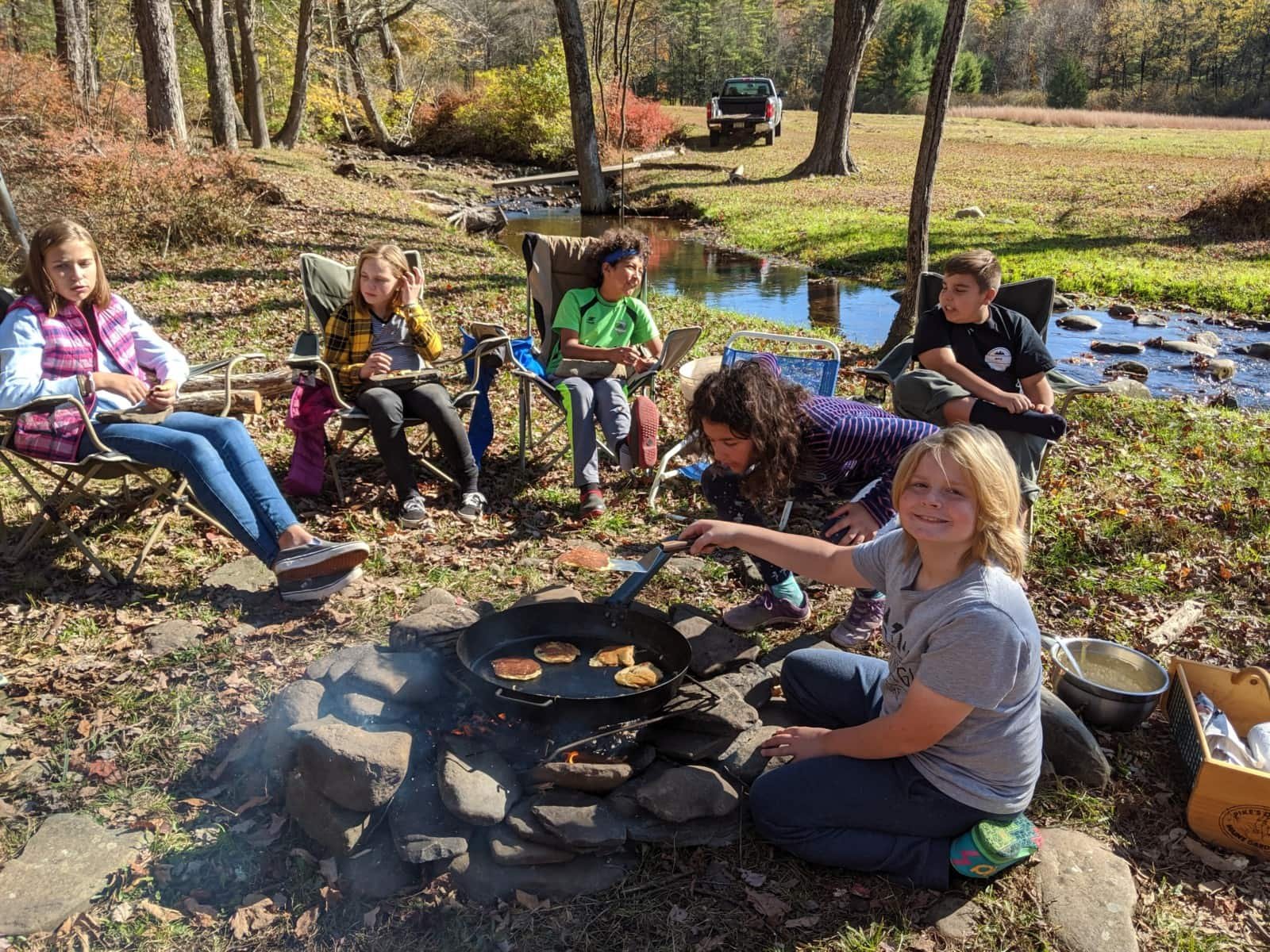
Montessori also spoke to the need to be part of the larger world when she encouraged “going out trips” for elementary-aged children. We bookend each school year with a community-building overnight experience on campus. We also complement our Cosmic Curriculum with several day trips throughout the year, and students are supported in creating their own field experiences and “going out” investigations.
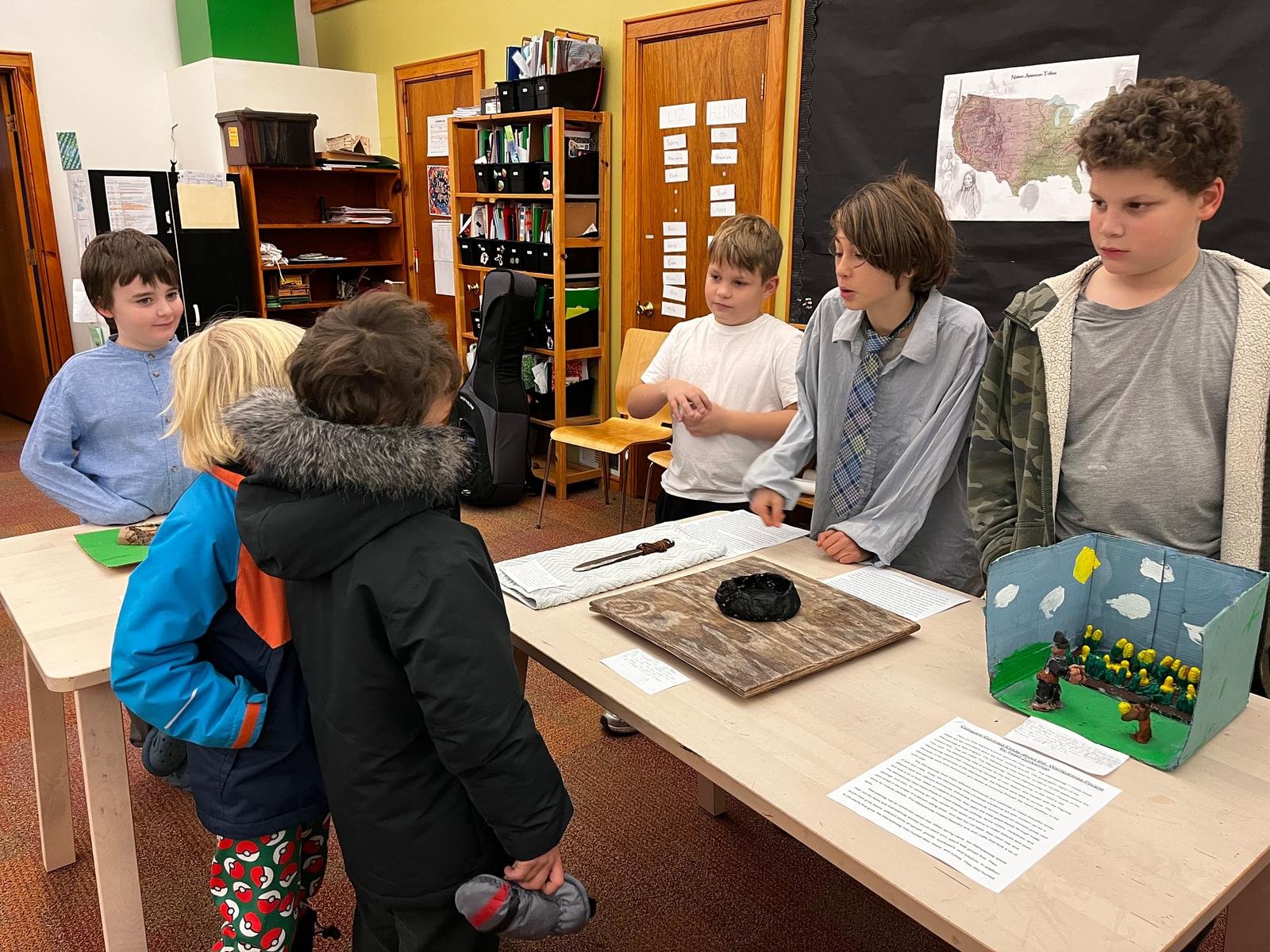
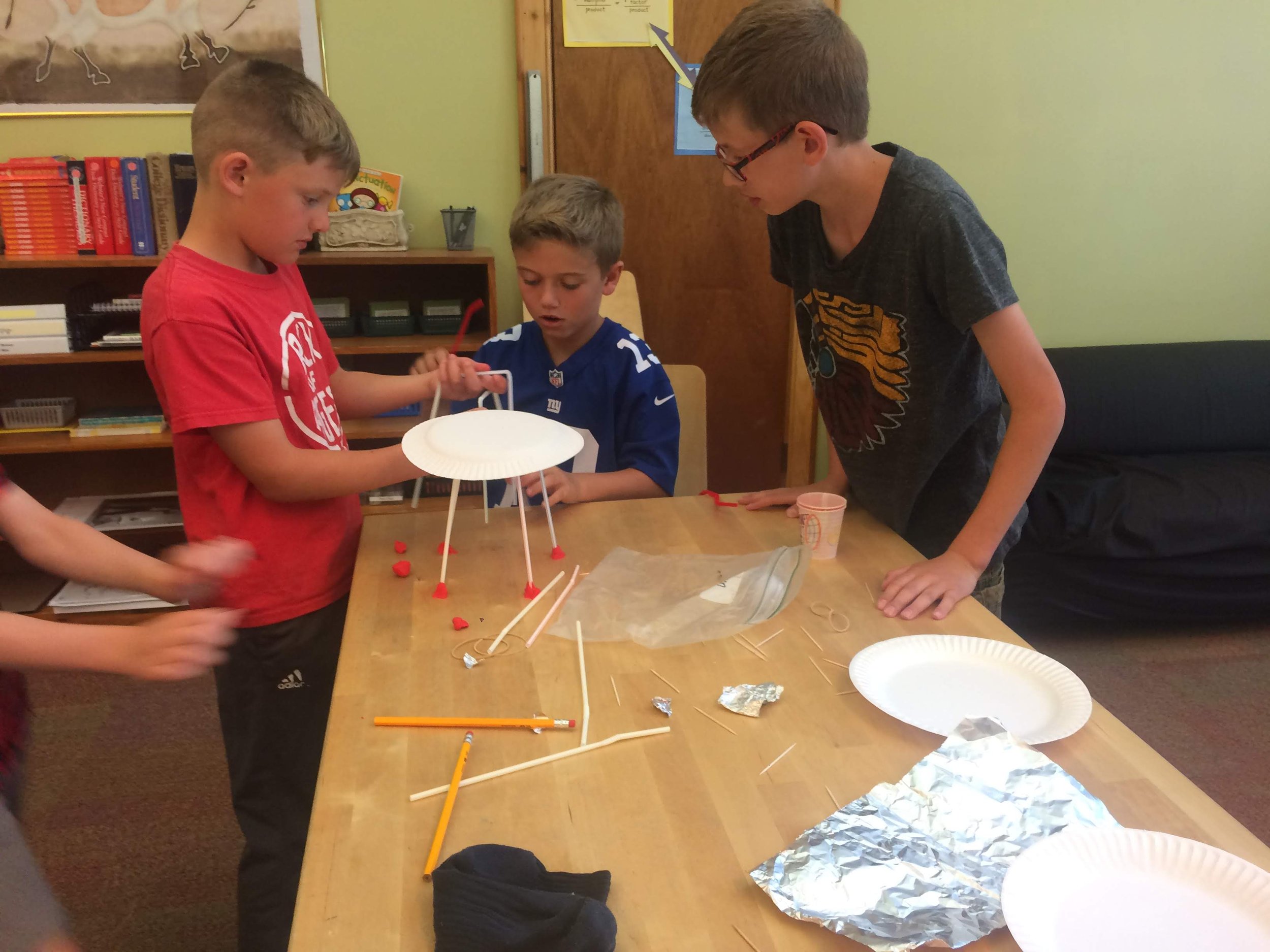
Within school, we capitalize on children’s needs for socialization by engaging in regular collaborative learning tasks. This can range from peer workshopping models to learning with lab partners to engaging with peers on longer-term projects. Collaborative, project-based learning dovetails with individuals’ essay-writing skills to culminate in a small handful of learning celebrations each year that are open to the younger children on the campus and families.