

Learning Permaculture Design Principles Through the CCHS Courtyard Project
By Andrew Faust | CCHS Faculty, Regenerative Planetary Studies
I am proud to share with you the inspired designs that our students created for the CCHS courtyard space. What we are teaching in this session is nothing less than whole site ecological design and planning.
We started with student teams of 3-4 people and learned how to assess the landscape for what the slope and landform is, for how water moves across the site, and where there are issues with it. Students observed existing site conditions with a strong focus on what's happening with the Sun as it moves from December 21st to June 21st at our latitude.
From these assessments, students made maps incorporating these layers of analysis through a method that is broken into three steps: analysis, assessment, and design. Each team presented their assessment and their design drawings explaining what they show in both maps and pitching their design ideas for the courtyard space.
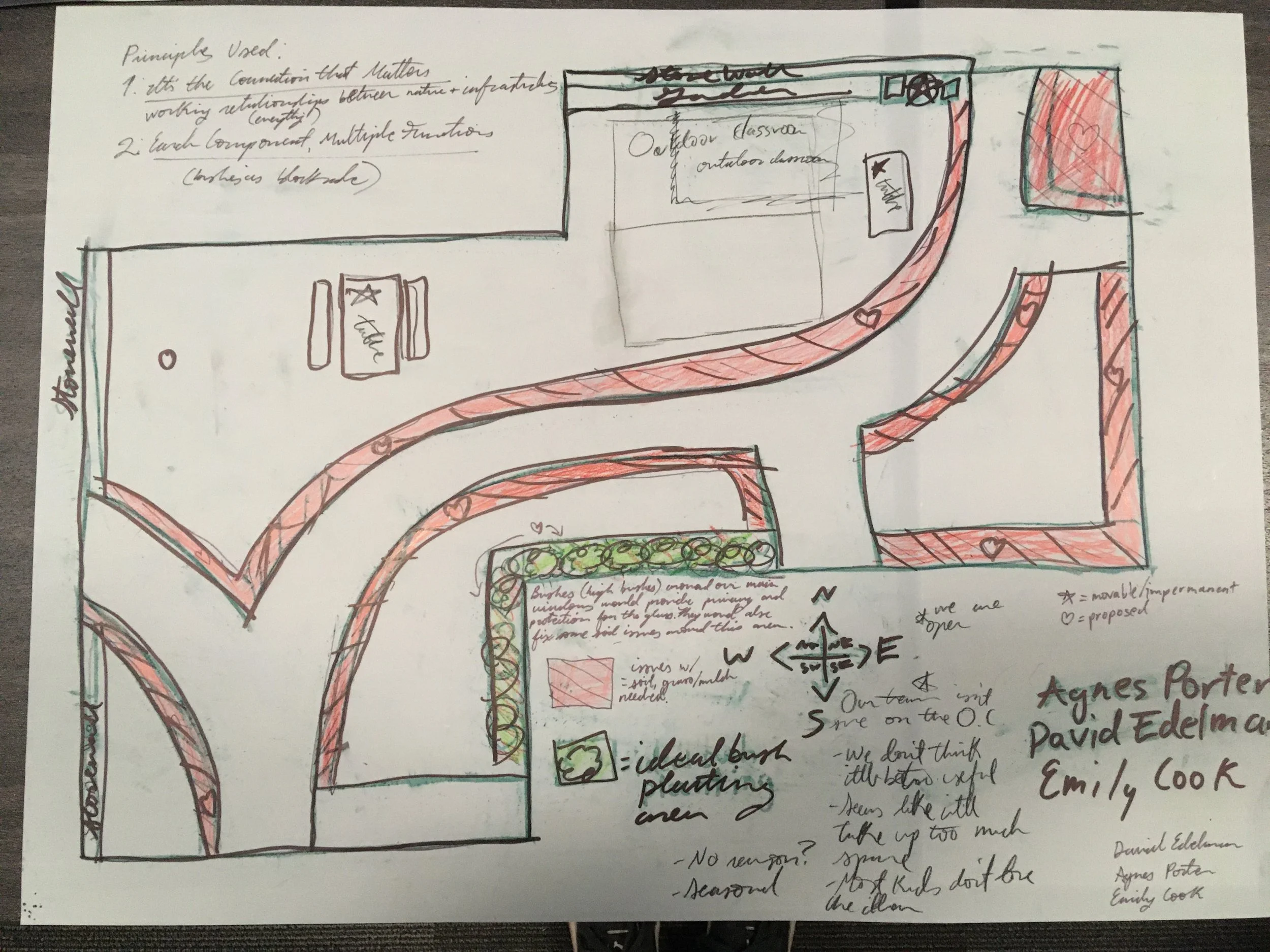
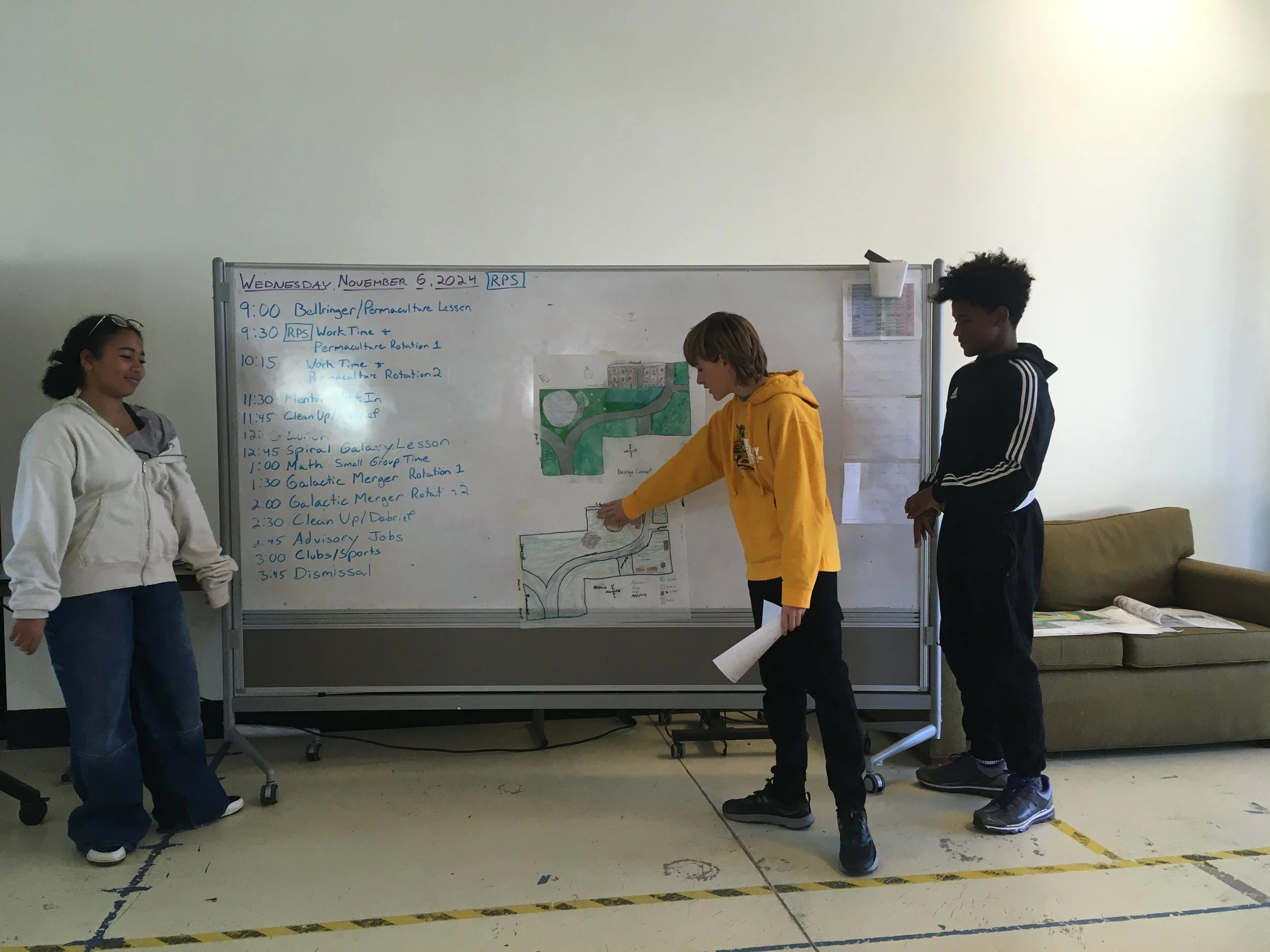

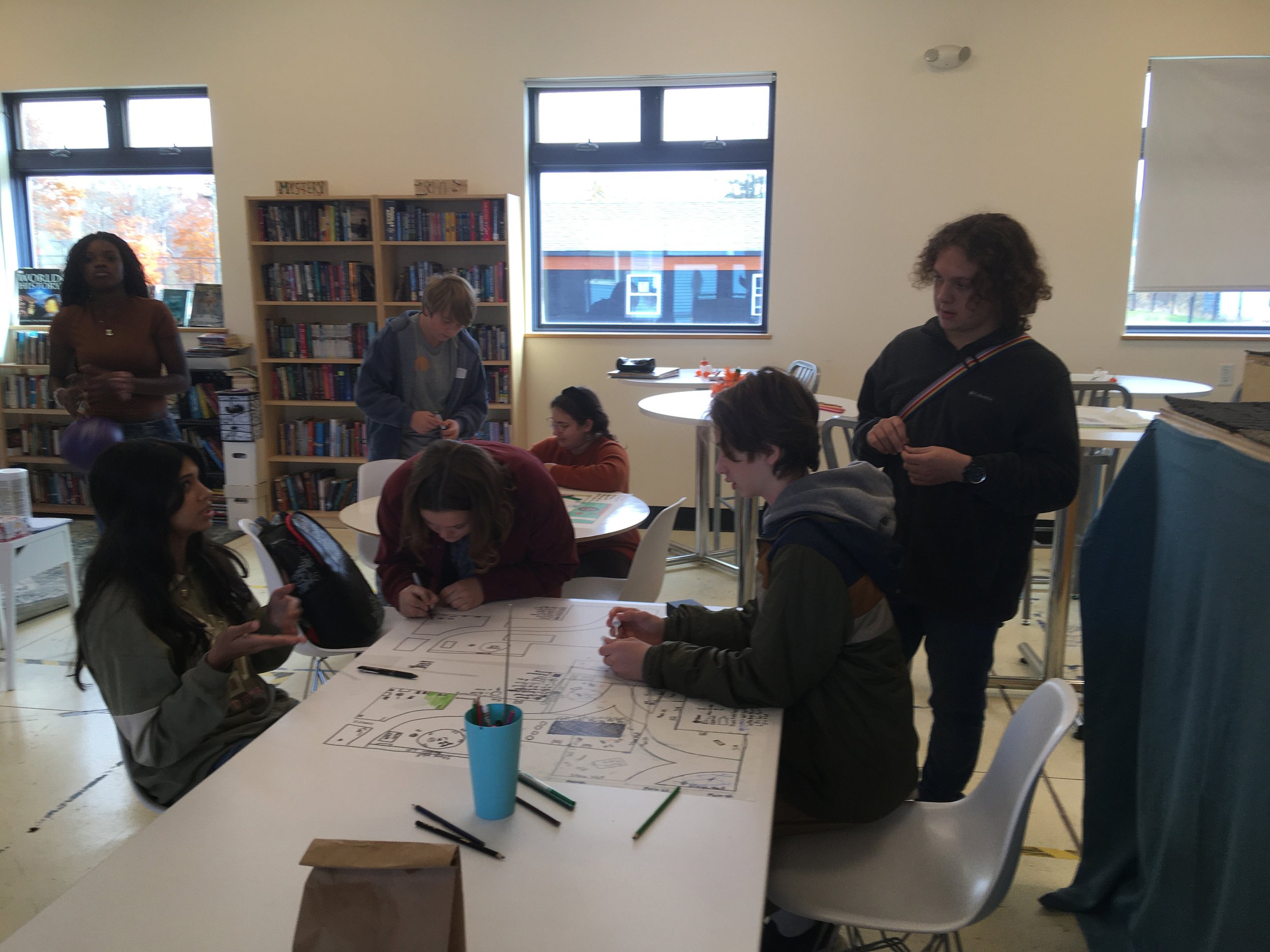

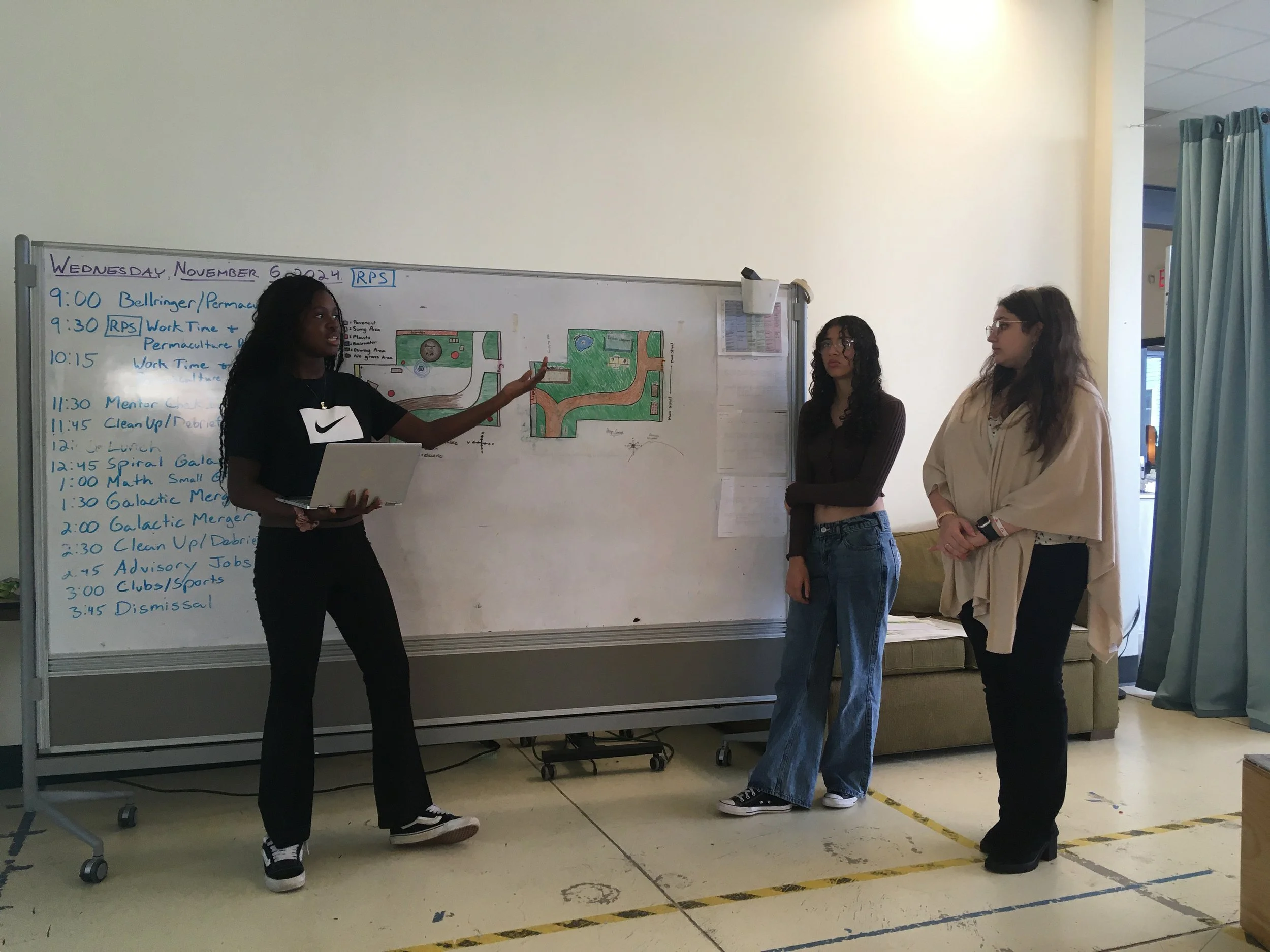
We emphasized the need for each team to address site location and designs for specific features including a future outdoor classroom, a cob oven, water features, plantings and sitting areas.
We are continuing this first phase of the course with groups designing the outdoor classroom in detail. Business elements, project management, and the mathematics and science of building and design are all a part of our students’ learning process.
Additionally, one of our teams is working on a scaled up design for a subsection of Hurleyville that we are excited to share at the CCHS Learning Celebration on the 29th of this month.
This courtyard design exercise is an ongoing theme for our Regenerative Planetary Studies course (RPS) to ground the sciences and mathematics in real world ecological design skills and solution sets. The process scales up and scales down quite seamlessly and helps to ground the technical and abstract aspects of math and the sciences in practical and down to earth applications.
Rooted in extensive and thorough mapping and observation of the landscape, this process informs students of their design ideas, teaching them how to be ecological and nature-based with their concepts and solutions. Additionally, these design exercises are geared towards empowering the students to design our way out of an unhealthy, exploitative, polluting economy and infrastructure and into an earth-conscious way of living and understanding the world.