

The 2024-2025 Future City Competition: CCHS Students Take Home Two Awards for “Azola City”
The Collaborative College High School (CCHS) participated in the Future City Competition for the first time this year, bringing a fresh perspective to the theme "Above the Current." The competition, which fosters creativity, math, engineering, problem-solving, and teamwork, challenged participants to envision sustainable cities of the future.
Our team, consisting of Jasper Lantz, Ashton Adams, Mira Comstock, Jaiden Galvin-Bliefernich, Elewa Torbert, Emmett Schwalb, Sophia Reinhardt, and June Faust-Magana represented our school with an innovative design that not only impressed judges but also earned two awards, with a $200 dollar cash prize.
Our team visited Shaker High School, located near Albany, for an exciting and engaging day. Our day began bright and early at 6:20 AM and concluded mid-afternoon. Aside from the planned presentations by the school and Future City team, our group did a lot, including a presentation and a Q&A session that Emmett, Elewa, and Mira presented/answered. Leading up to the event, the group worked on creating a city model, developing a project plan, and writing an essay about our envisioned city.
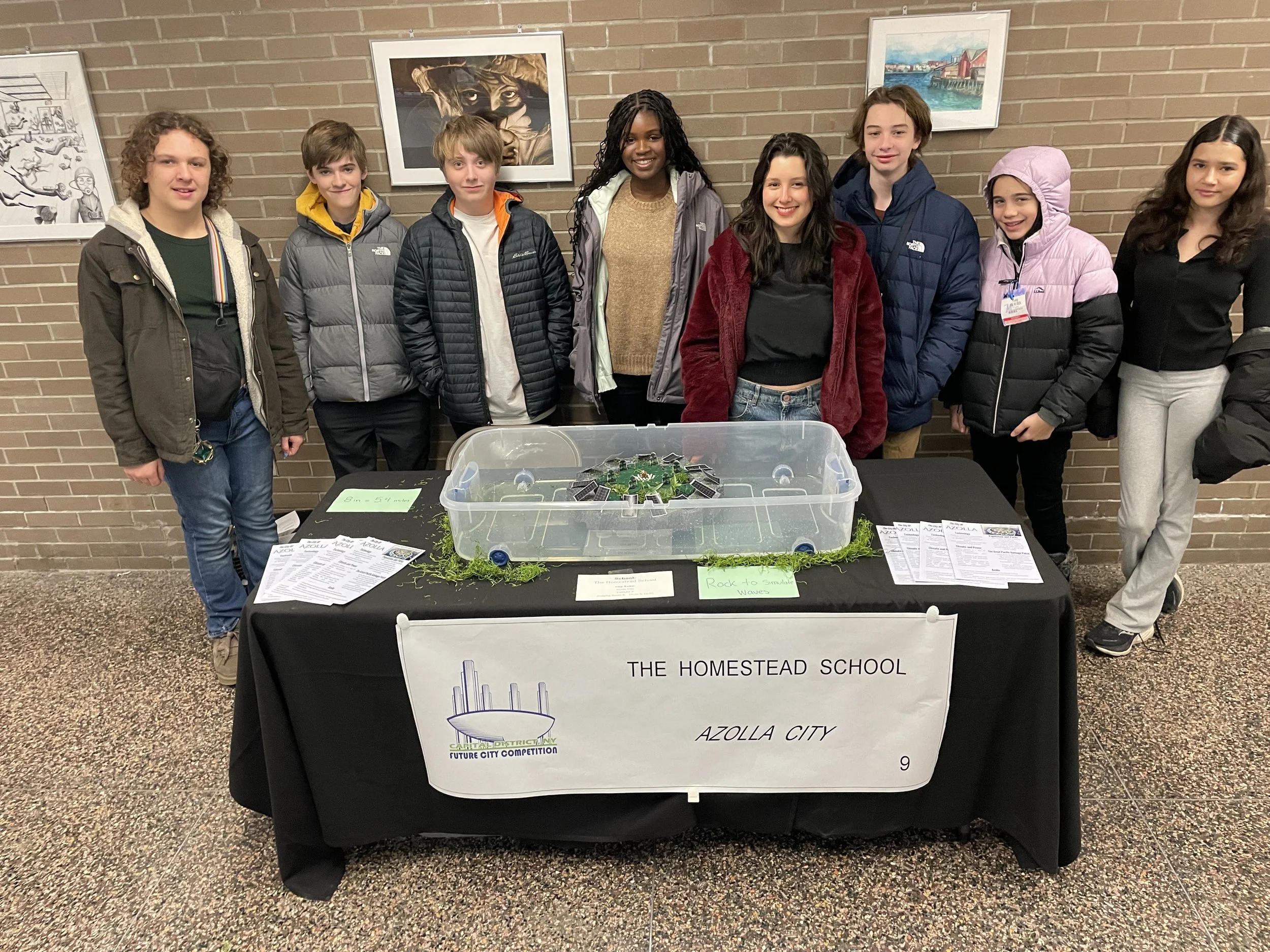
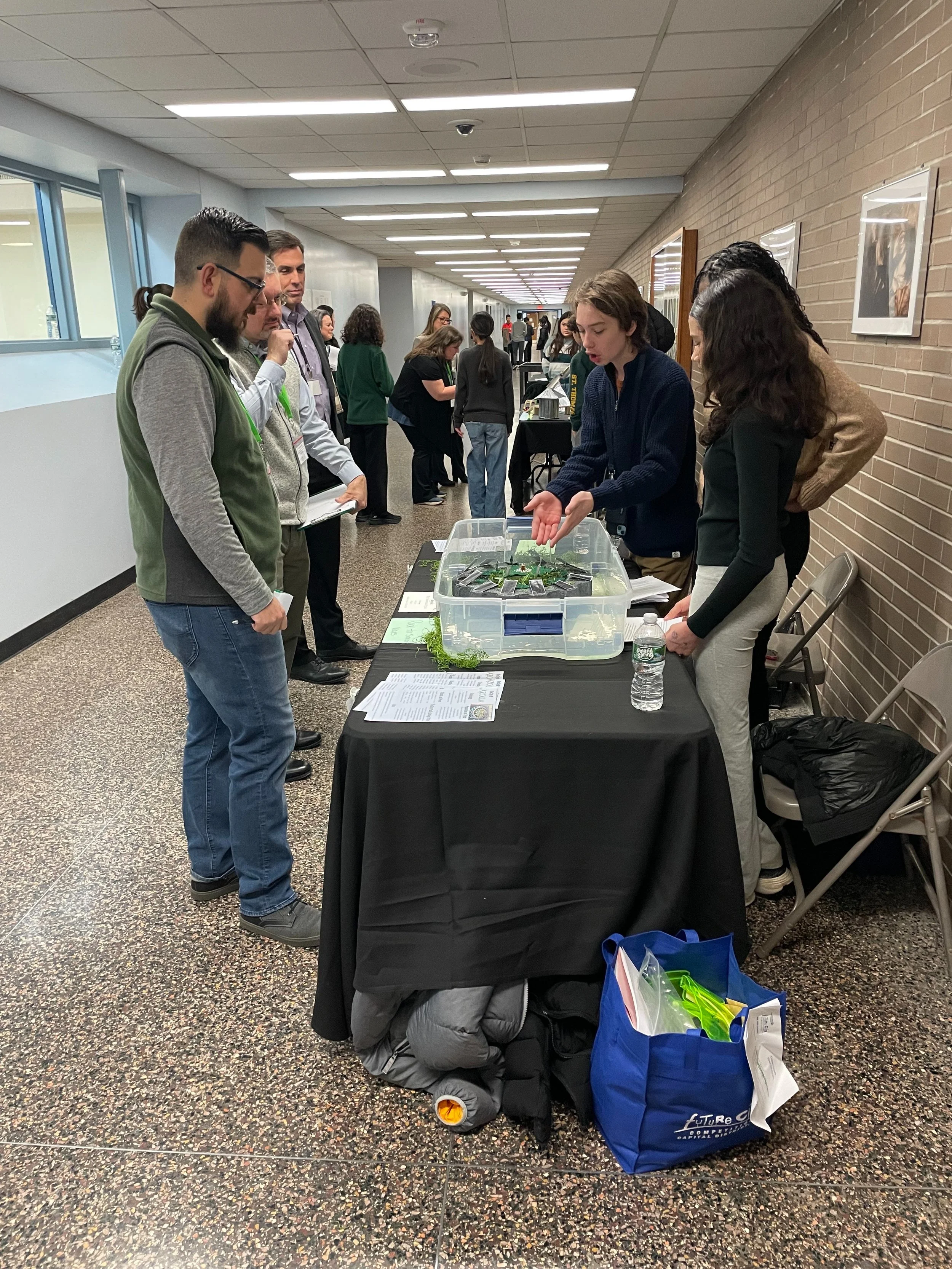

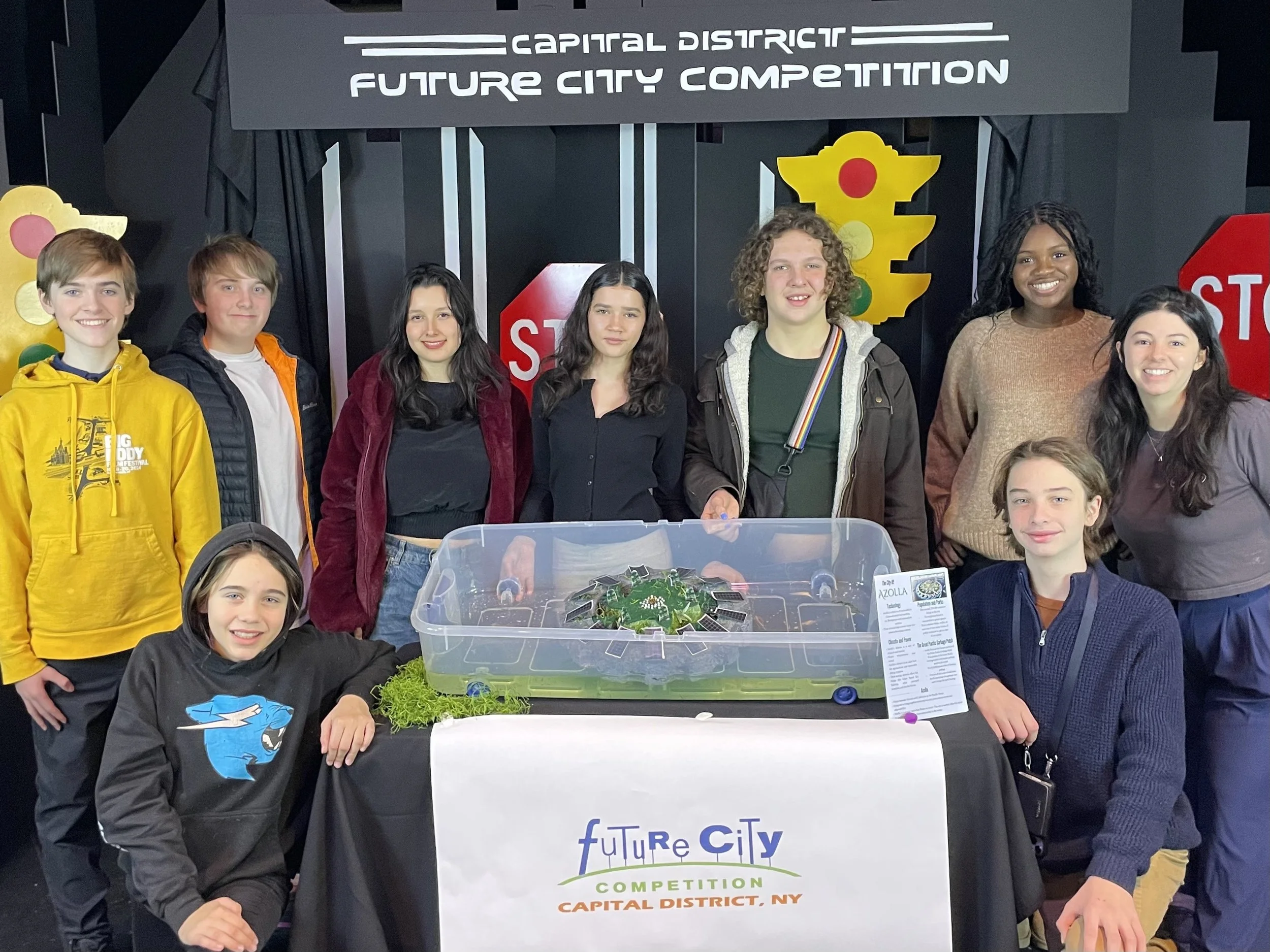
The team’s creation, Azola City, was a groundbreaking proposal built on the Great Pacific Garbage Patch– an area of the ocean where massive amounts of plastic waste are concentrated. Rather than seeing the garbage patch only as a symbol of environmental crisis, the students saw it as an opportunity to innovate, using the patch itself as the foundation for a new urban environment.
Azola City was designed using oil rigs for structural stability, creatively repurposing them to support a floating city. The team also incorporated discarded fish nets to hold trash in place, buoying them to create an eco-friendly float that kept waste contained while the city flourished.
One of the most compelling features of Azola City was its emphasis on sustainability and self-sufficiency. The city was designed so that all essential services were within 5 minutes walking distance for its residents.
This thoughtful urban layout ensured that daily life could be conducted without reliance on cars, reducing pollution and fostering a sense of community. The team also integrated cultural festivals and traditions into Azola City’s framework, celebrating diversity and promoting social connections. This holistic approach reflected the Montessori principles at the core of The Homestead School’s educational philosophy, where interdisciplinary learning and community engagement go hand in hand.
Participating in the Future City Competition was a valuable experience for the team. It provided them with a platform to apply their knowledge in engineering, environmental science, and urban planning while also fostering creativity and collaboration. The recognition of Azola City by the judges through two awards, Best City Layout and Best Options for Accessibility, was a testament to the hard work and ingenuity of our team.
The Homestead School is proud of its students accomplishments and looks forward to future involvement in the competition. The Future City Competition has shown us that with innovative thinking and a commitment to sustainability, the future of urban living can be both environmentally conscious and socially vibrant.