

Love as Pedagogy
By Jack Comstock, Director of Programs
Dear Homestead Community,
In my last letter, I reflected on the urgency and purpose of education in a time of transition. Here, I would like to dwell more deeply on one of the irreplaceably human dimensions of learning: our nature as embodied, relational beings.
Many of our greatest minds have marveled at the relational nature of the Universe. The deep pattern that emerges in our reflection and study of cosmic evolution from atoms, to cells, to mammals, to human culture is the drive toward increasing complexity of relationship, care, and knowing. As we celebrate in our great stories, this is the Universe becoming aware of itself through us, as us. Another way to understand this is as the increasing capacity for love, an inherent principle of the Universe, that through us has the potential for full embodiment and expression.
If we understand education to be the process that guides us into the fullest development of our human capacities, and if we also understand true education to be in service to human and planetary flourishing, then we must understand that at its core, education is not only shaped by relationship, it is made possible by it.
In this way love must be understood as central to pedagogy.
I do not mean love as sentimentality, indulgence, or lowered expectations. I mean something more demanding and more real: deep attention, respect for the dignity of the child, commitment to truth, patience with growth, and the willingness to remain present through difficulty.
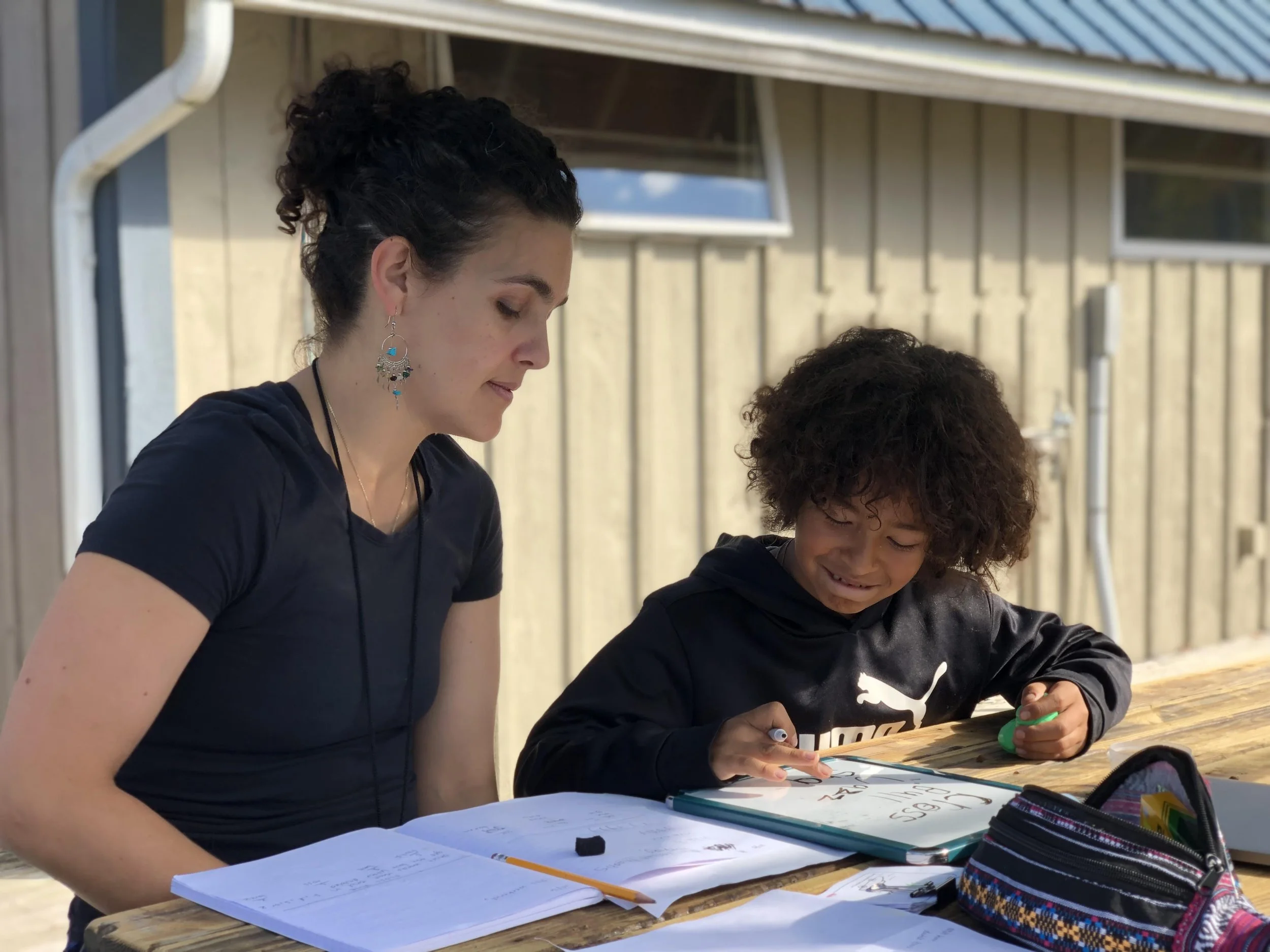
Love, in this sense, is not an addition to good education. It is the condition that makes genuine learning possible.
Children and adolescents learn best where they are known, respected, guided, and challenged within relationships of trust. They grow when they feel safe enough to try, to fail, to persist, and to begin again. Without that relational ground, learning too easily collapses into performance, anxiety, or compliance.
Maria Montessori understood this with remarkable clarity. She insisted that the child should love what he learns, and that intellectual, emotional, and moral development are deeply linked. She also understood that education must place the child in relation with humanity and the world, so that learning expands into gratitude, responsibility, and participation in a larger whole.
This vision feels especially urgent now.
We are raising children in a culture increasingly shaped by distraction, fragmentation, and the commodification of attention. In such a world, loving attention becomes a radical act.
To truly see a child, to listen carefully, to observe closely, to create the conditions for concentration, wonder, effort, and repair are among the most essential expressions of education we have.
At a time when win-lose metrics are modeled at nearly every level of society, and when both human and non-human life are so often treated as expendable in service of economic or political agendas, education must offer something different. It must help young people grow beyond fear, competition, and instrumentalism into a deeper experience of relationship, responsibility, and care.
This is also why love and rigor do not stand in opposition. Love allows adults to hold clear boundaries without shame, and high expectations without fear. At its best, loving discipline says: I see your potential, and I will not give up on you.
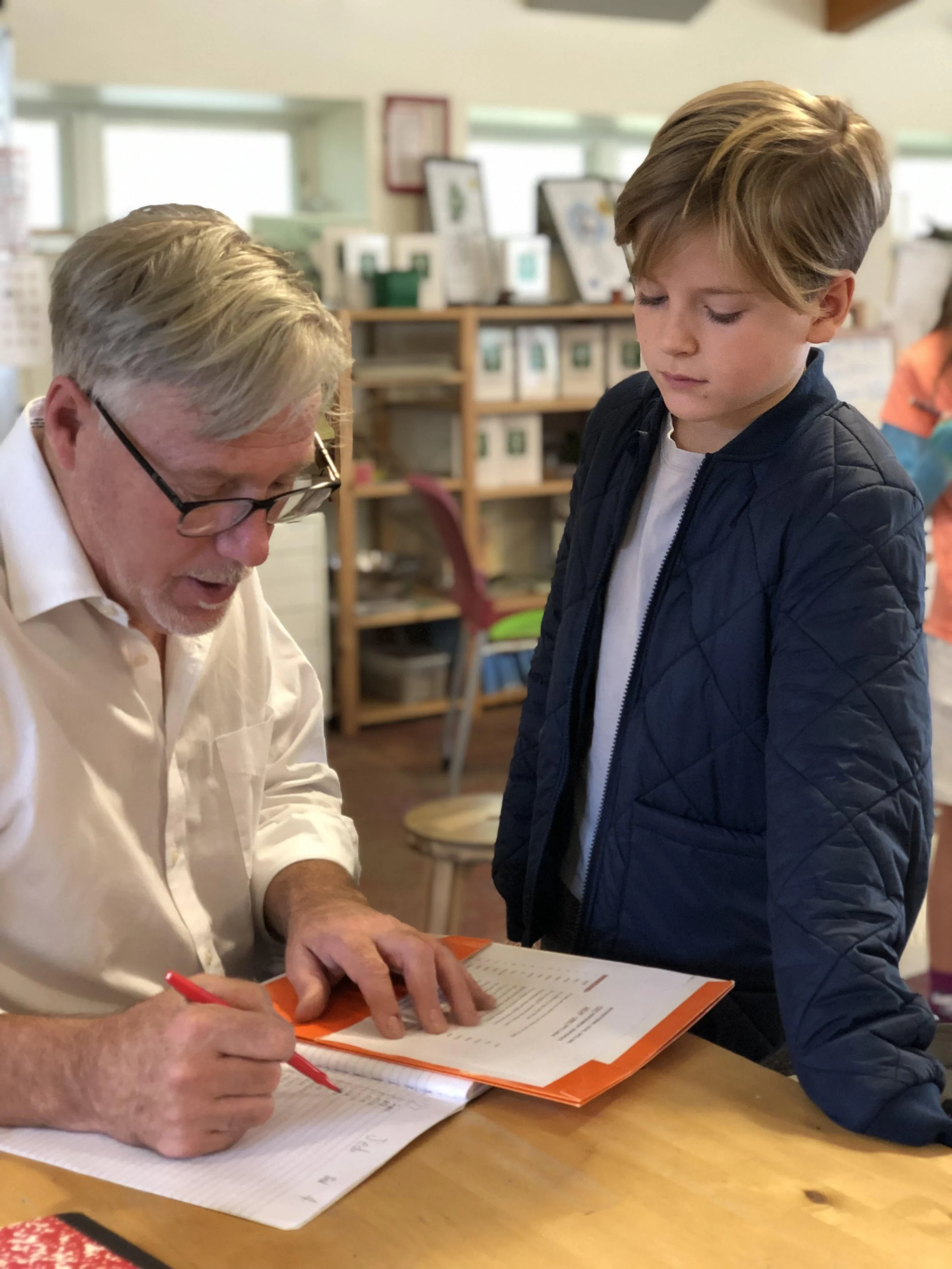
At Homestead, this understanding lives in countless daily moments: a teacher slowing down enough to notice what is really happening beneath a child’s behavior, a restorative conversation after conflict, an adolescent challenged toward greater responsibility because an adult believes deeply in who they are becoming.
Love is not separate from the formation of a whole human being. It is part of what makes that formation possible.
And love is sustained by community.
Love in education is a shared responsibility among guides, parents, grandparents, and mentors. Every act of patient attention, moral seriousness, truthful encouragement, and care strengthens the field in which young people grow.
In a world of materialism, polarization, and geopolitical unraveling, love can sound naïve to some ears. I believe the opposite is true. Love is not naïve. It is disciplined. It is discerning. It is developmentally necessary. It is one of the few forces capable of forming human beings who can meet complexity without collapsing into fear, cynicism, indifference, or nihilism.
Your support of Homestead helps sustain this kind of education: education rooted in relationship, shaped by care, and devoted to the development of the whole human being.
With gratitude,
Jack Comstock
