

By Emmett Schwalb, CCHS Student
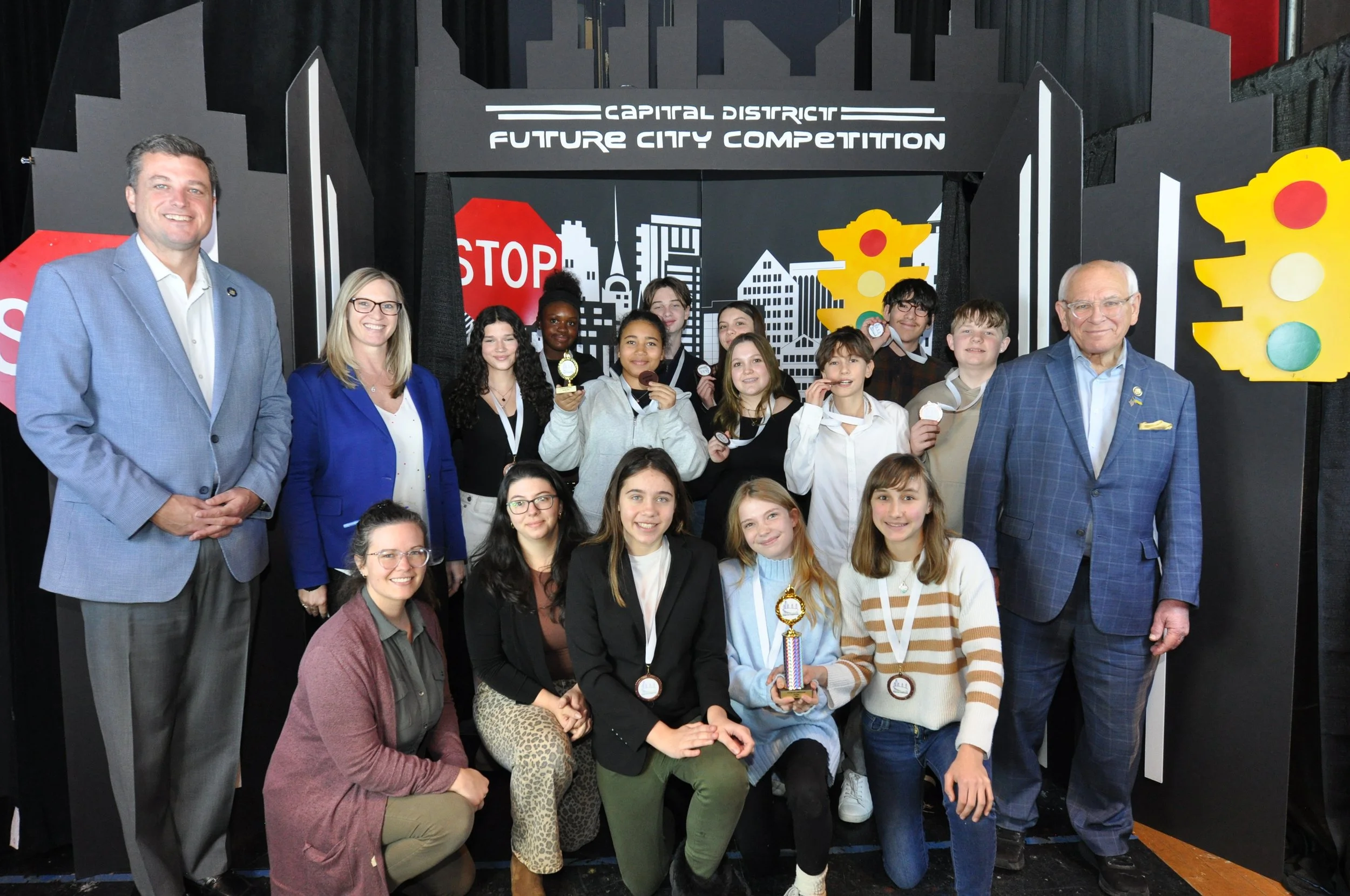
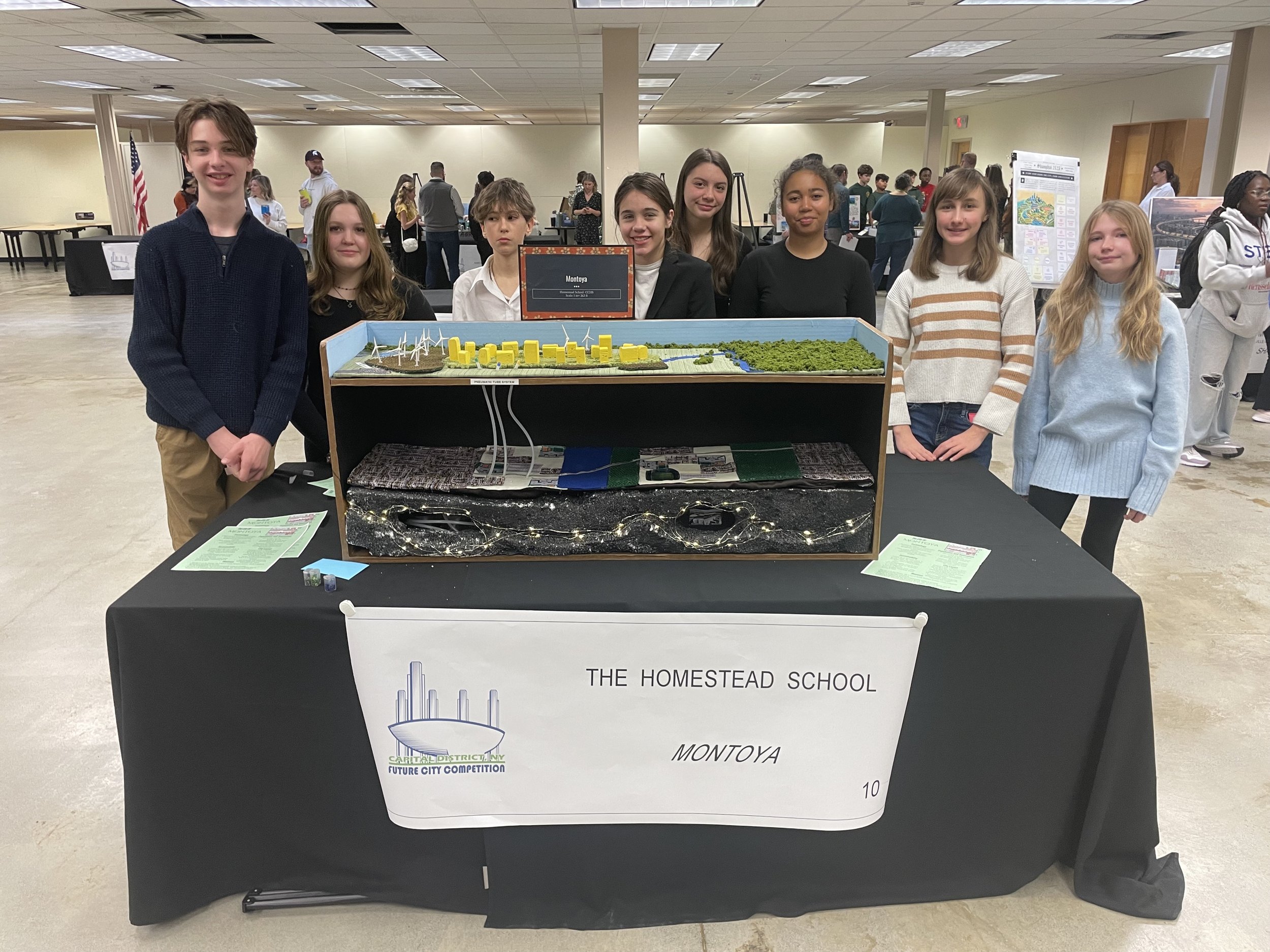
For months, the Future City team of CCHS have been tirelessly working to design the best city of the future. The Future City competition is a national middle and high school competition in which students are tasked with creating a ‘Future City’ while solving the problem or theme given to them. This year, the problem students were tasked with solving was food waste. Each team needed to create a large-scale model of their city, write a 1,500 word essay about their city, and create a presentation they would give live in front of multiple judges at one of the many regional competitions. This year, the CCHS team created the city of Montoya, a partly underground city that fully eliminated food waste.
In early September, the team met for the first time, starting with background research like watching documentaries and taking a field trip to the New York City architecture model making company known as Kennedy Fabrications. Then, the students began planning out their city. They decided to make their city mainly underground, located in Kansas, and after a heated debate, the students landed on the name Montoya. “We started with mapping out a rough draft of how our model may go,” said Clare Porter, a city planner. Guided by Abi Johnson and Amee Templin, students then branched out into teams, one further planning out the city while working on the model, and another team writing the lengthy essay.
The city planners decided on two underground levels, Sub-1 and Sub-2. Sub-1 would be mainly residential, while Sub-2 would serve as the city’s industrial district, housing innovative food waste systems like Biodigesters and the city’s pneumatic tube system. As they worked, the writing team finished their essay and sent it to the competition judges, which was due a month before the in-person competition, just before winter break. “I thought it was really impressive how you all [The Future City Students] tackled different aspects of the competition and found ways to contribute,” said Abi Johnson, a Guide.
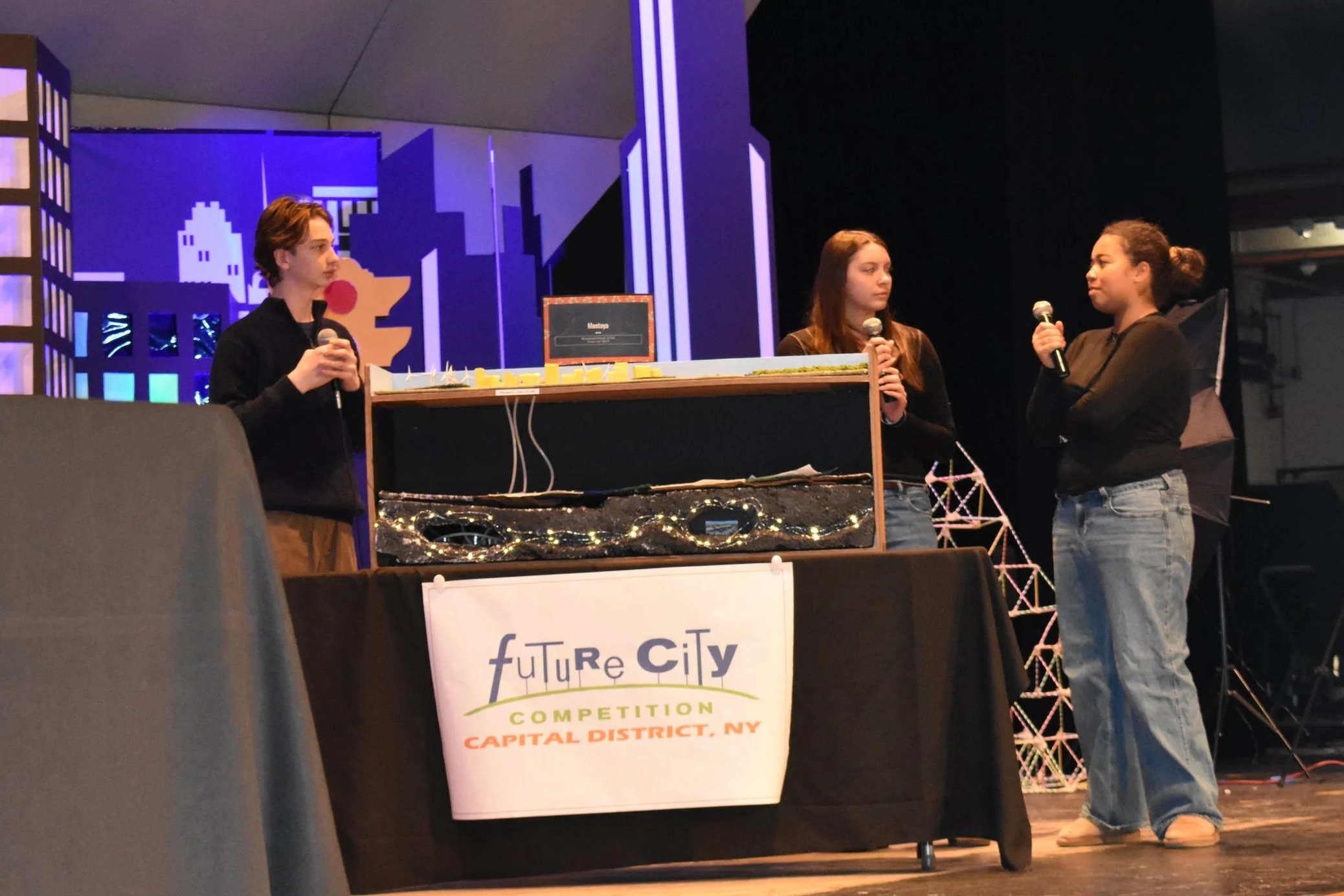
After students returned from winter break, they only had two weeks to build their final model and to create a 7-minute presentation to showcase their city. After voting, students decided on three team members who would present the city to judges live at the competition. Amira Jabrane, Bryn Hogancamp, and Emmett Schwalb were chosen to present. The team wrote a funny gimmick for their presentation, mimicking Jeopardy. They gathered materials and arranged them, creating the large model.
Soon, it was the day of the competition. The students arrived with their model to Shaker High School in Albany, New York, a two-hour drive away. The team walked into a room with the many other teams and their models. Here, the competition’s model judges would interview the teams and rate their models. “It was really nerve wracking,” said Sophia Reinhardt, a member of the CCHS team.
Soon, the team was brought to a small classroom to give their presentation twice for two sets of five judges, followed by an 8-minute question and answer segment. If the team did well, they would get to give their presentation in front of everyone on the auditorium stage as part of the top three. The team had worked tirelessly for months, and were hoping their labor would pay off.
After lunch all of the teams anxiously gathered into the auditorium awaiting the announcement of the top three. The announcers gathered on the stage with the list in hand “...and the top three teams are… the City of Montoya, CCHS…” The team had made it to the top three! “It became apparent throughout the day that we would place highly, but it was an absolute shock and joy when we placed in the top 3!” said Abi Johnson, one of the team's facilitators.
Now the scary part began. The students would have to present in front of all the competitors in the auditorium. The three presenters made their way to the stage, where their model was waiting. They then gave their presentation which was once again followed by a question and answer session. The rest of the team watched anxiously. We had to “hold our breaths as they [the judges] judged our presentation in front of 200 people.” After their time on stage, the team got to sit back, relax, and watch the other two presentations.
Now, it was time to see what place the team got. First, the honorary awards were handed out. The team received an award for the 'Best Considerations for Accessibility,’ Now, finally, the team got third place, as well as an award for the best question and answer segment and seven hundred dollars for the CCHS STEM program. Looking back on the competition, Amira Jabrane shared about the final round of judging: “I decided I need to do well or not do it at all, but I got up there and tried my best, and we got third!”
In the end, the team left satisfied, already thinking about next year.
